Bury it. Ship it. Burn it. Or end it.
For fifty years, hazardous waste technology has meant moving the problem. Regen is built on a different logic: separate the contaminant, concentrate it, return the rest. The liability ends onshore.
HOW WE GOT HERE
Five eras of hazardous waste.
Each era fixed the optics of the one before it. None of them ended the liability.
THE SHIFT
Three things you can do with hazardous waste.
Dilutes the problem and multiplies its volume. One cubic metre becomes six. The liability is buried intact.
Neutralises the hazard and downgrades the material to inert filler. The value is destroyed with the risk.
Ends the liability and returns the value. The contaminant is concentrated and recovered. The material goes back to use.
Recovery is the only outcome that ends the liability and returns the value.
THE PLATFORM
One machine at heart. Two stages of separation.
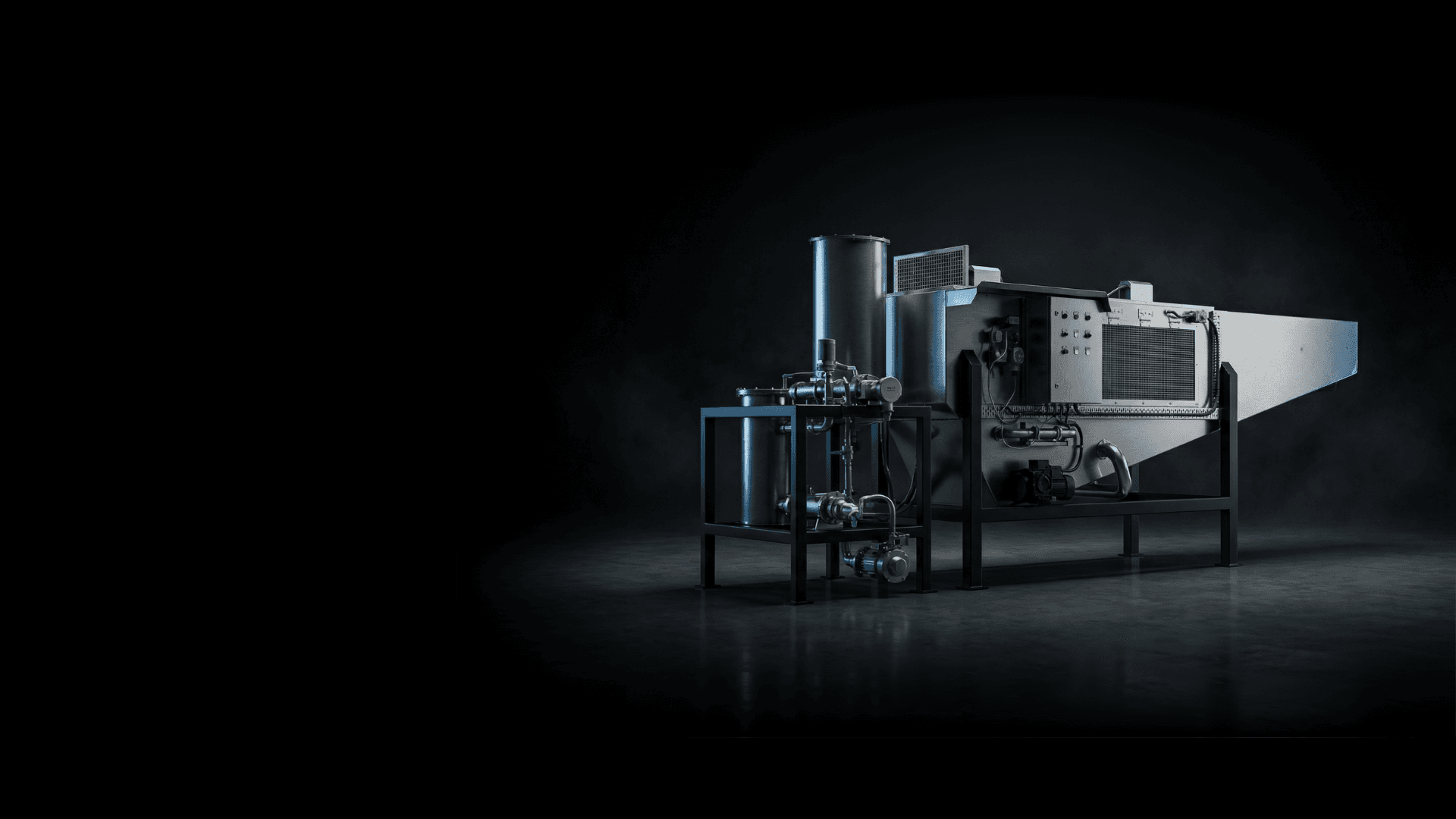
Every Regen deployment is the same machine at heart, running two stages of separation. Mechanical first. Chemical second. The proprietary chemistry is the hard part, and it’s what turns separation from a sorting exercise into recovery.
Around the core, Regen is configured per job with skid-mounted front ends. A screener, trommel and wash line for contaminated soils. Dewatering for sludges and filter cakes. Liquid handling for washwaters, IBCs and tank stock. The core stays constant. The front end changes.
HAZARDOUS STREAM IN
01 CHARACTERISE
Analyse the stream
02 SEPARATE
Target the contaminant, not the tonnage
03 CONCENTRATE
Tonnes collapse to kilograms
04 VERIFY
Independent lab, mass balance closed
CONCENTRATE
Under 1% of mass. Drums, not truckloads. Recovered chemistry returned to NZ industry.
RECOVERED MATERIAL
About 99% of mass. Returned to use or clean fill.
Every stream is characterised before processing. Every job closes with independent laboratory verification, reported as mass balance. The numbers reconcile or the job is not done.
In a single pass, Regen separates 90 to 99.9%+ of the target fraction from the host material. On the right chemistry, contaminants leave below laboratory detection.
HEAVY METALS · IN SERVICE ORGANOCHLORINES · IN SERVICE PCBs · BENCH-VALIDATED PFAS · SEPARATION & CONCENTRATION MIXED STREAMS · IN SERVICE
THE VALUE
Built to beat the landfill on its own terms.
LOWER COST
Burial carries a hidden multiplier: one cubic metre of toxic sludge becomes six of landfill, and the generator pays for all six. Regen processes the original volume, priced per kilogram. Recovery competes at or below the total cost of stabilise-and-landfill, and every levy increase widens the gap.
100% ONSHORE
Processed in New Zealand, at our Nelson facility or deployed to your site in days. Nothing is exported. No offshore custody risk, no waiting on foreign treatment slots, no accountability shipped out with the waste. The liability ends here and the recovered value stays here.
DRUMS, NOT TRUCKLOADS
Separation collapses the hazardous fraction. Regen recovers 90% or more of target contaminants and cuts hazardous mass leaving site by up to 1,000 to 1. The clean fraction goes back to use. What once left as a truck fleet leaves as drums.
NEXT PLATFORM ·
IN DEVELOPMENT
Regen recovers the chemistry. Aether recovers the energy.
Aether is Graymark’s second platform, in development at our Nelson facility: converting organic and carbon-based residues into renewable fuels, targeting renewable CNG and bio-methanol. Same logic as Regen. Take a stream the country pays to bury, return an input industry pays for.