



·
Explainer
Recover the resource
Graymark’s position paper. New Zealand’s industrial waste holds recoverable fuels, chemicals and feedstocks. We bury them, burn them or ship them offshore. That era is ending.
New Zealand’s industrial waste streams contain recoverable fuels, chemicals and feedstocks. We bury them, burn them, or ship them offshore. That era is ending.
What we believe
Every tonne of industrial waste shipped offshore or sent to landfill is a failure of infrastructure, not an inevitability of industry.
New Zealand’s primary industries, dairy, meat processing, forestry and horticulture, generate waste streams rich in recoverable fuels, chemicals and feedstocks. The technology to recover these resources exists today. What has not existed is the deployment capacity to put it where it is needed, at a scale that makes commercial sense.
Centralised mega-plants are the wrong model for a distributed, seasonal economy. Modular, containerised recovery systems deployed at the point of generation are the answer.
Decarbonisation and commercial viability are not at odds. Resource recovery is the rare case where the economics and the emissions maths agree.
New Zealand can either continue exporting its waste problem, or build the systems to recover, refine and reuse it domestically. We choose to build.
The problem
A country that processes raw materials for the world has no infrastructure to recover what is left over. Dairy, meat, forestry and horticulture generate the bulk of our export revenue. These industries are world class at turning raw inputs into high value products. They are badly underequipped to deal with what comes out the other side.
Spent solvents. Contaminated washwater. Process residues. Off-spec chemicals. Waste oils. Organic sludges. These are not marginal by-products. They are high volume, chemically complex streams generated at every major processing site in the country. Most contain recoverable chemistry, reusable compounds or valuable feedstock precursors. Almost none of it gets recovered.
Instead of recovering value, we pay to dispose of it. Waste is trucked to landfill, incinerated without energy capture, or containerised and shipped offshore. This is not a disposal strategy. It is an admission that we never built the alternative. There is no secret government facility that will process this waste if regulations tighten or export markets close. You have to build the recovery capacity. And you have to build it here.
How we got here
For decades, industrial waste management operated on a simple model: generate, collect, dispose. Landfill was cheap. Export was easy. Regulation was light. No one invested in recovery because disposal was always cheaper than building the systems to avoid it. Three forces are breaking that model at once.
Regulatory pressure is compounding. The Waste Minimisation Act, tightening emissions obligations and a rising waste disposal levy make disposal progressively more expensive. Every year, the cost of doing nothing goes up.
Export pathways are closing. The Basel Convention amendments and tightening import restrictions across Asia have narrowed the markets willing to accept New Zealand’s industrial waste. The assumption that someone else will deal with it is becoming operationally false.
The opportunity cost is becoming visible. As renewable fuel mandates, green feedstock requirements and carbon markets mature, the latent value in industrial waste streams is becoming quantifiable. What was a disposal liability now has a visible price as a recoverable resource.
The shift
From waste disposal to resource recovery. From cost centre to value stream. The conceptual shift is straightforward: stop treating industrial by-products as waste and start treating them as misallocated feedstock. The technical shift is harder. It needs purpose-built chemical processing, modular enough to deploy at distributed sites, robust enough to handle variable inputs, and commercial enough to stand on its own.
This is a deployment problem, not a research problem. New Zealand’s waste problem is not a lack of chemistry. It is a lack of modular, deployable, commercially structured recovery systems. The chemistry is the easy part. The hard part is putting it where the waste is.
A new model
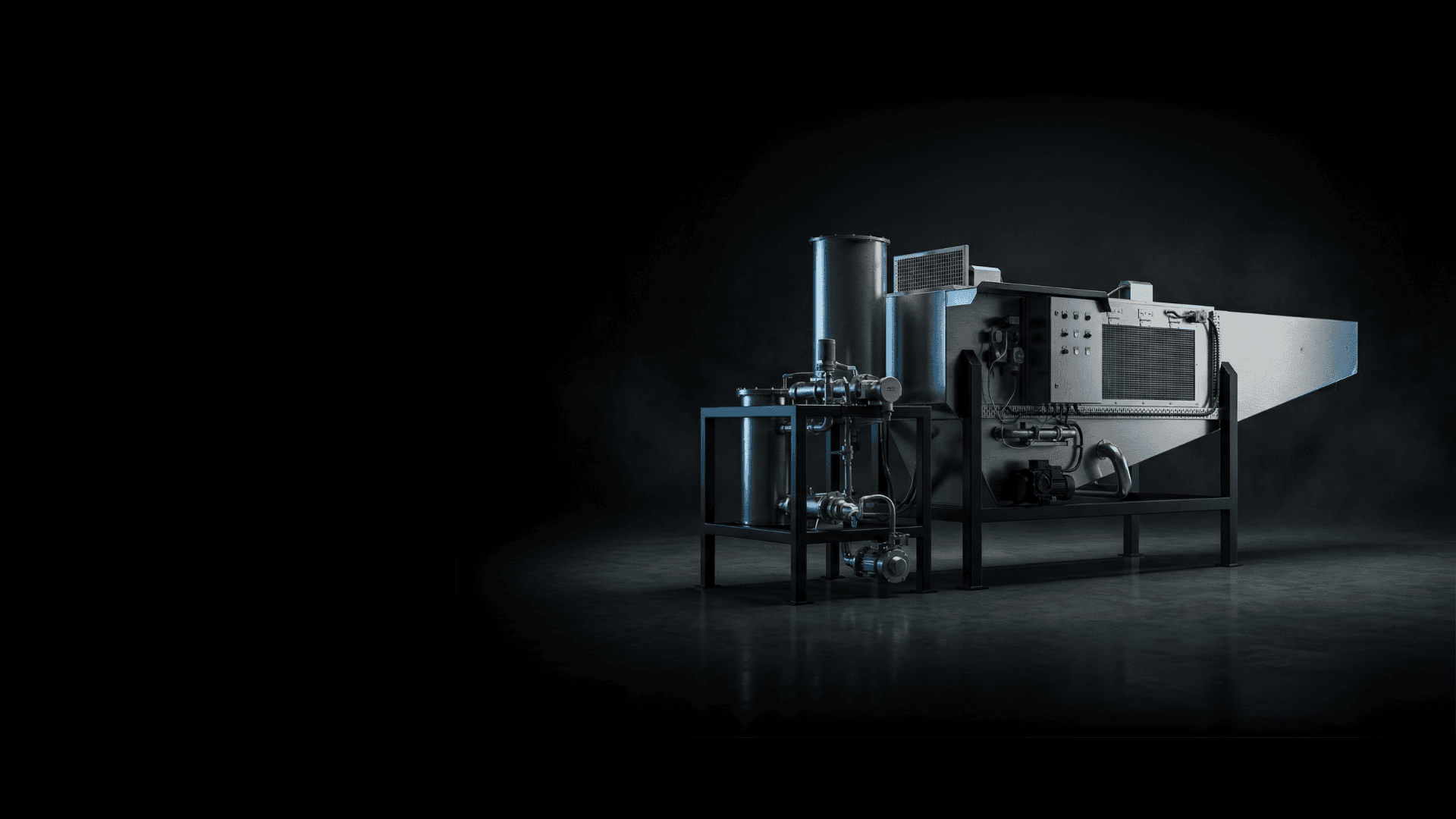
Modular capital first. We build containerised, modular systems sized to the stream. Deployable in days, relocatable if the economics shift, repeatable as demand grows.
Deploy at the point of generation. Trucking hazardous waste hundreds of kilometres to a central facility is expensive, carbon intensive and fragile. Our systems go to the waste, not the other way around.
Commercially viable without subsidy. If a recovery system only works with grants and credits, it does not work. We design for unit economics that stand on their own. Levies and credits are tailwinds, not foundations.
A system, not a project. Every deployment generates operating data that improves the next one. We are not building one-off installations. We are building something that gets better and cheaper with every stream.
Built for licensing and partnership. New Zealand is the proving ground, not the ceiling. Systems designed for our primary industries transfer directly to primary industry processing elsewhere.
No single-stream dependency. A business that relies on one waste type from one industry in one region is fragile. We build across multiple recovery pathways, serving multiple industries.
What we are building
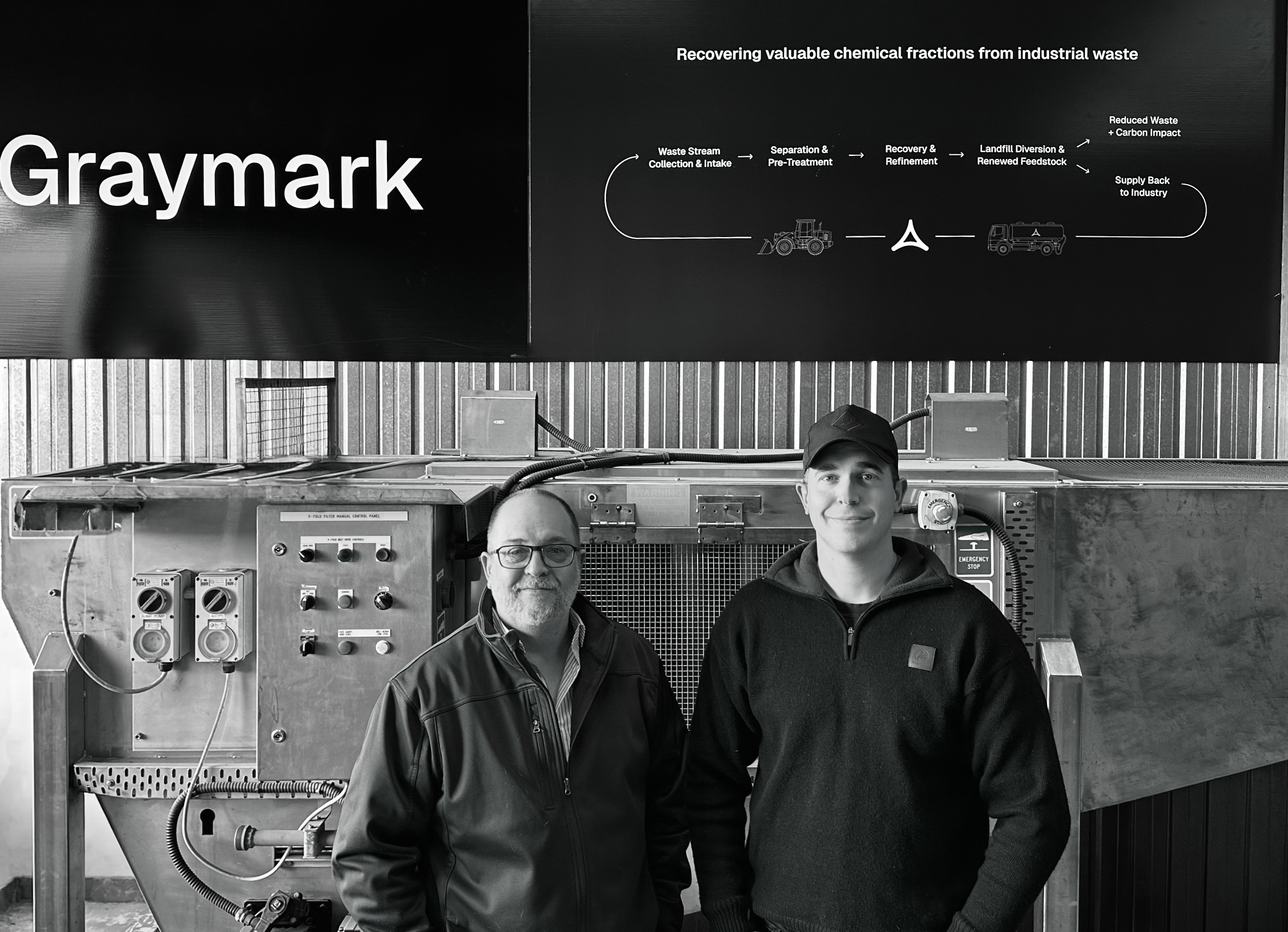
Regen. Containerised chemical recovery for contaminated soils, treatment residuals, liquids and the persistent fractions New Zealand has had nowhere to send. Commercial since October 2025.
Aether. Renewable gas and liquid fuels from the organic residues primary industry already produces. Graymark’s second recovery system.
Supply the resource
Part one makes the case: New Zealand is landfilling materials it then reimports as industrial inputs. Burying copper while buying copper. Entombing chemistry while shipping it in. Paying twice, once to dispose and once to procure, for the same molecules. The obvious question is: recovered into what?
Waste is a failure of imagination, priced in. Every tonne crossing a weighbridge is a materials decision someone declined to make. Treatment sludge is copper, chrome and arsenic in the wrong place. Spent glycol is glycol with impurities. Solvent washings are solvent, diluted. Industry calls these things waste because separating them used to cost more than replacing them. It doesn’t any more.
Recovery without supply is just expensive disposal. Pulling contaminants out of a stream and then landfilling the concentrate misses the point. The loop closes only when recovered material re-enters industry as specification-grade input: treatment chemistry back to the plant, solvent back to the line, metal back to the smelter. That return leg is logistics and quality assurance, not sentiment. Independent verification on every batch. Delivery like a supplier, because that is what recovery becomes at maturity: supply.
Sovereignty is a supply chain you don’t have to apologise for. New Zealand imports nearly all of its industrial chemistry across some of the longest supply lines on earth. Every recovered tonne is a tonne that doesn’t ride a ship, doesn’t queue at a port, and doesn’t reprice with freight and geopolitics. This is not a green argument. It is a procurement argument.
The endgame is a materials economy that doesn’t leak. Regen recovers the chemistry. Aether carries the loop into fuels. Stop the bleeding. Recover the value. Supply the resource. That is the whole thesis. The rest is execution.
What comes next
There is no secret processing facility that will handle this if export markets close or regulations tighten. You have to build it. If you are an operator, policymaker or engineer who understands that New Zealand’s industrial waste capacity is a generational build and not a compliance checkbox, we want to hear from you.
Next entry
What actually happens to New Zealand’s hazardous waste
→