





·
Answer
PFAS in soil and water: separation, concentration, and what happens next
PFAS does not break down. The useful question is how to get it out of the soil or water and into a small, defined volume. Here is what that looks like, and what it does not claim.
PFAS are persistent. That is the whole problem and the whole reason the name sticks. The carbon-fluorine bond does not break down in soil, in water or in the organisms that take it up. Once it is in a site it stays there until someone moves it, and in New Zealand it is mostly in the places firefighting foam was used.
Where it is
Fire training grounds. Airports. Defence land. Landfill leachate, where it arrives from everything the landfill ever accepted. And the spent carbon and resin that water treatment uses to catch it, which then becomes the next PFAS stream. Ministry for the Environment guidance covers investigation and response, and more sites are being found each year as sampling spreads.
What has been done with it
Containment, landfill or export. Impacted soil is capped or sent to a Class 1 landfill, where the PFAS joins the leachate. New Zealand has exported foam stockpiles for destruction offshore. Water is run through carbon and resin, which fills up and becomes a solid stream. In every case the PFAS is somewhere else, usually at the same concentration it started.
Separation and concentration
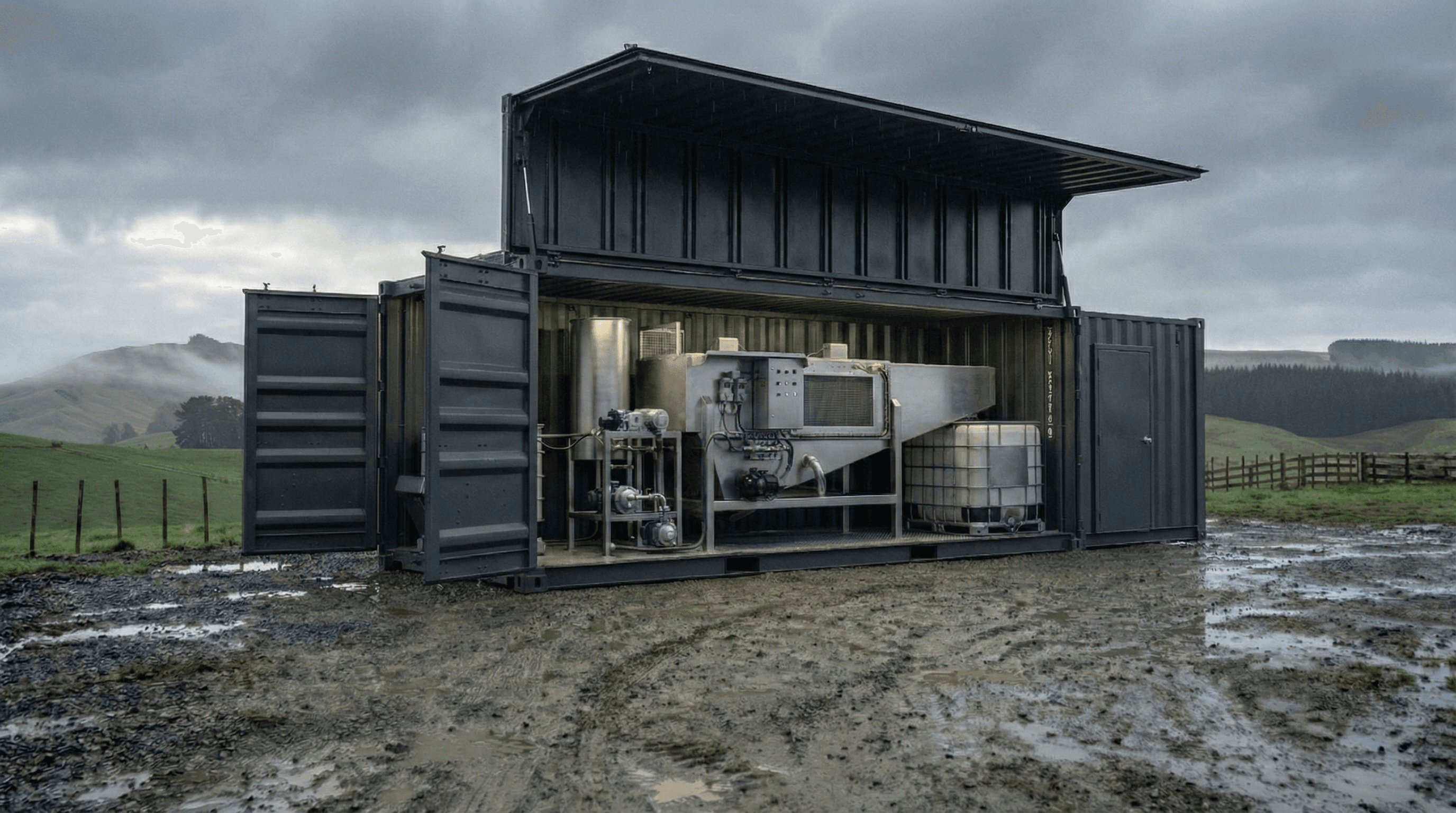
The useful question is not how to make PFAS disappear. It is how to get it out of the soil or water it is in and into a small, defined volume that can be handled as one thing. That is what Graymark does. PFAS is separated from the matrix and concentrated. The soil or water is tested by an independent laboratory against your site or discharge criteria and returned. What leaves is the concentrate, a fraction of the original mass, with its own chain of custody.
What happens next, and what we do not claim
Destruction of the concentrate is a downstream step handled by specialist facilities. Graymark does not claim it. We claim the separation, the concentration and the verified clean fraction, and we document each of them. For a landowner or a council that means the site stops holding a diffuse PFAS liability across tonnes of soil and starts holding a defined one in a drum.
Getting started
Send the site investigation if you have it, or a sample if you don’t. PFAS-impacted soils, waters and media are standard work for Regen, at our Nelson facility or on site. We quote within a week.
Why concentration is the useful step
A tonne of impacted soil is a tonne of liability spread thin. The same PFAS in a drum is a defined quantity with a defined custody, which is what every downstream step needs, whether that is specialist handling, secure storage or a permitted shipment. Concentration turns a site problem into a logistics problem, and logistics problems have prices.
Spent carbon and resin
Water treatment operators have a particular version of this. Carbon and resin do their job, fill up, and become a PFAS stream that has to go somewhere. Regen takes spent media as standard work: the PFAS is separated and concentrated, the media is verified by an independent laboratory, and the operator gets a report instead of a stockpile.
How a job runs
Send the analysis if you have it, or a sample if you don’t. We characterise the stream before it is accepted and come back with a pathway and a price within a week of receiving the sample. Material is processed at our Nelson facility by the tonne or by the tranche, or Regen arrives on your site by truck and is running in days. Every job ends with an independent laboratory report on the clean fraction: characterisation, batch log, independent results, certificate.
Questions.
Next entry
I own a HAIL site. What can I do before the remediation plan is written?
→