Treatment residuals

Treatment residuals

Sludges, washings, filter cake, rags and tank bottoms from timber treatment, galvanising, plating and chemical processing.

Where it comes from.

Where it comes from.

Every treatment process leaves something behind. Timber treatment plants produce sludges, drip-pad washings and filter cake carrying the copper, chromium and arsenic they run on. Galvanising and plating lines produce metal-laden rinse sludges and spent baths. Chemical processors accumulate tank bottoms, rags and off-spec batches. These residuals arrive by the drum and by the IBC, every month, for as long as the plant runs.

Timber treatment plants

Galvanising and plating lines

Chemical processing and formulation

Treatment plant maintenance and decommissions

What usually happens to it.

What usually happens to it.

Stabilise and bury. The residual is blended with binder until it passes landfill acceptance criteria, then goes to a Class 1 landfill under the waste disposal levy. The treatment chemistry inside it, which the plant paid to buy, is lost with it. The generator pays for the binder, the freight, the gate fee and the levy, and keeps the liability.

What Graymark does with it.

What Graymark does with it.

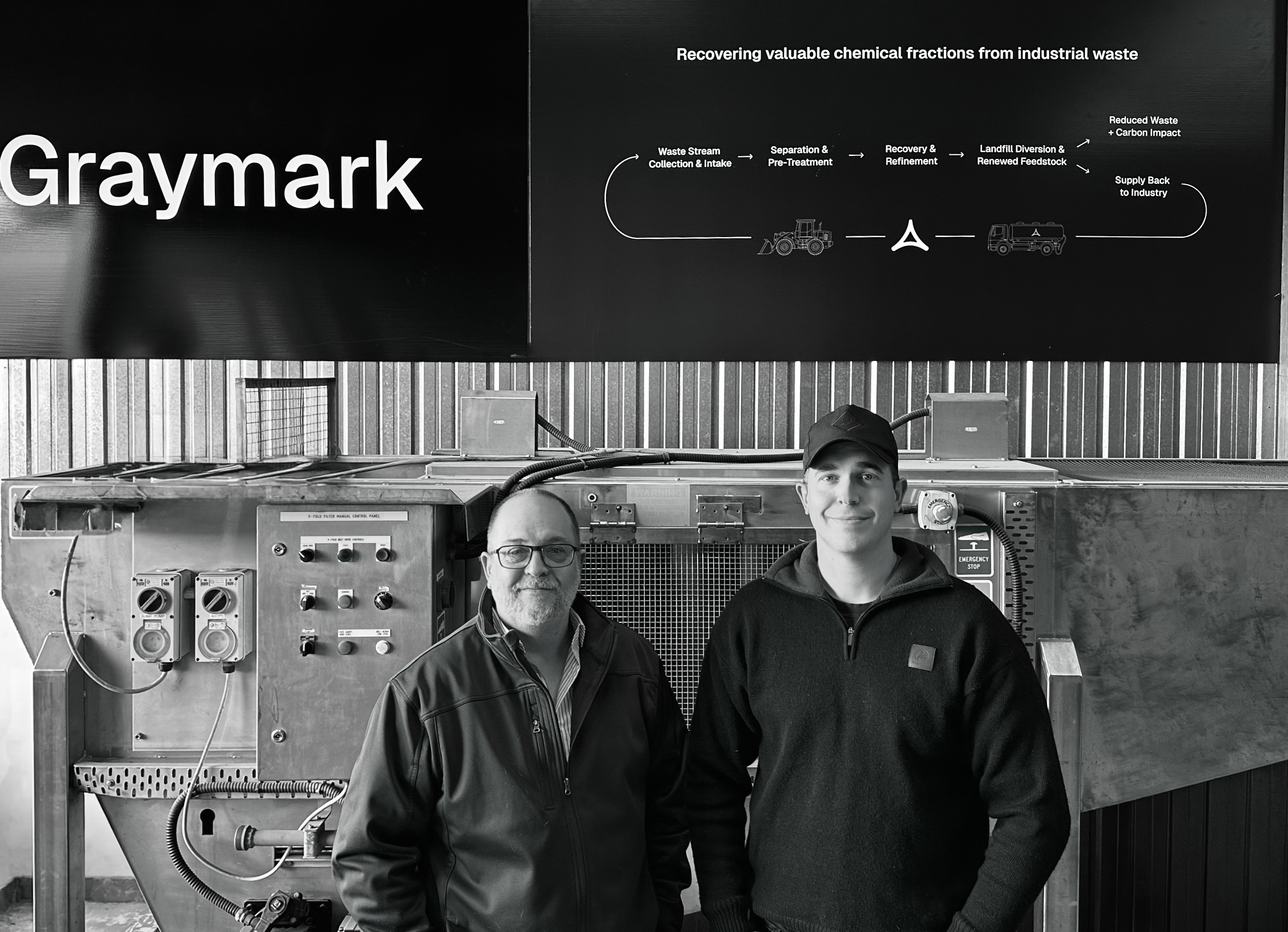
The treatment chemistry is recovered and credited back where it can be. The residual leaves as concentrate. Regen takes residuals as standing work: priced per kilogram, scheduled around the plant, cleared on a cycle that suits production. Every run closes with an independent laboratory report so the residual stops being a line on the generator’s liability register.

Questions.

Questions.

Where it meets specification, yes. Recovered chemistry is credited back to the generator or returned to the industry that runs on it. Where it cannot be reused, it leaves as a small, defined concentrate.

From a pallet of drums to a monthly tranche. Residuals are usually standing work on a schedule set around your production. Send us a sample and the monthly volume and we quote within a week.

Characterisation of the incoming stream, a batch log against that characterisation, independent laboratory results on the clean fraction, and a certificate and report within days of the final batch.

Stop paying to bury it.

Send the analysis if you have it. Send the problem if you don’t. We come back with a pathway and a price within a week of a sample.

Stop paying to bury it.

Send the analysis if you have it. Send the problem if you don’t. We come back with a pathway and a price within a week of a sample.

Stop paying to bury it.

Send the analysis if you have it. Send the problem if you don’t. We come back with a pathway and a price within a week of a sample.

Engineering the next generation of hazardous waste management.

Engineering the next generation of hazardous waste management.

Engineering the next generation of hazardous waste management.

Contact

Nelson, New Zealand

© 1997–2026 Graymark Technologies Ltd